Introduction to 111.150.90.2004
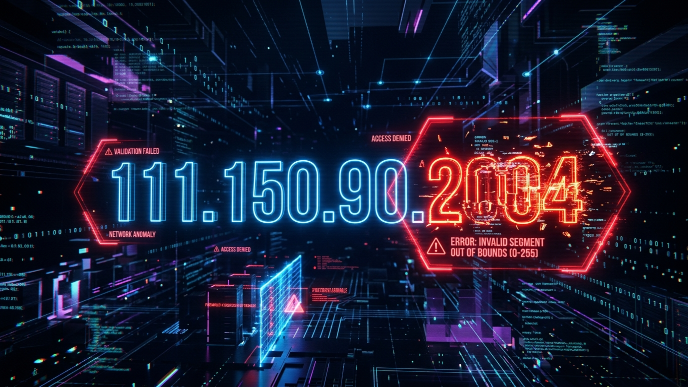
The sequence 111.150.90.2004 looks like an IP address at first glance, but in reality, it does not follow valid internet protocol rules. Many users search for such numbers when they appear in logs, messages, or online data, trying to understand whether they represent a real device, a server, or some form of tracking identifier.
In modern networking, IP addresses are essential for identifying devices and enabling communication between systems. However, not every number formatted like an IP address is actually valid. The case of 111.150.90.2004 is a clear example of a malformed IP-like structure that fails technical validation rules and cannot exist in real-world internet infrastructure.
Understanding What an IP Address Really Is
An IP address is a unique numerical identifier assigned to devices connected to a network. It allows computers, smartphones, and servers to communicate with each other by sending and receiving data across the internet.
In IPv4 format, an IP address is made up of four numeric sections separated by dots. Each section must stay within a defined range to ensure proper communication and routing. This structured format ensures that every device has a unique identity on the internet.
Without IP addresses, digital communication systems would not function, as there would be no way to locate or differentiate devices across global networks.
Why 111.150.90.2004 Is Not a Valid IP Address
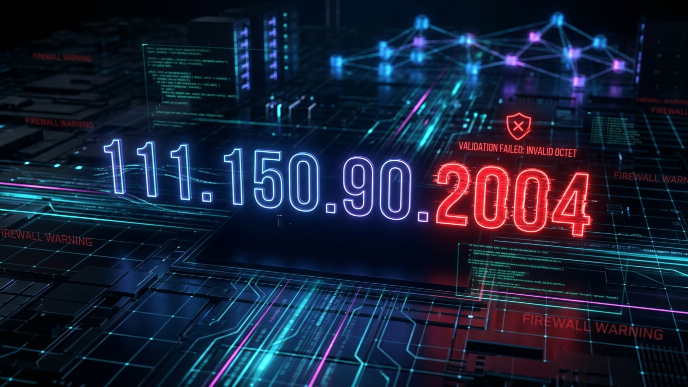
The sequence 111.150.90.2004 is invalid because it violates a core rule of IPv4 addressing. Each segment of an IPv4 address must be between 0 and 255. The final segment in this case, “2004,” exceeds this limit by a large margin.
Because of this violation, networking systems automatically reject it during validation. Devices, routers, and servers are programmed to recognize only properly formatted IP addresses, and anything outside the allowed range is discarded.
This means 111.150.90.2004 cannot be assigned to any device or used for communication on the internet.
IPv4 Structure and Why Limits Exist
IPv4 addresses are based on a 32-bit system divided into four octets. Each octet represents 8 bits, which limits values from 0 to 255. This mathematical structure is the reason IP addresses follow strict formatting rules.
The limit of 255 exists because 8 bits can only represent a maximum binary value of 11111111, which equals 255 in decimal form. Anything above this value cannot be processed within IPv4 architecture.
Because of this limitation, any sequence like 111.150.90.2004 is automatically invalid and cannot function within real networking systems.
How Invalid IP Formats Like 111.150.90.2004 Appear
There are several reasons why invalid IP-like sequences appear online. One of the most common causes is simple human error, where extra digits are added accidentally during typing or data entry.
Another reason is system-generated placeholder data used in testing environments. Developers often use incorrect IP formats to test whether validation systems can correctly detect and reject invalid inputs.
Additionally, such numbers may appear in logs or datasets where data corruption or formatting issues occur, producing non-functional IP-like strings.
Role of IP Validation in Network Systems
IP validation is a critical process in all modern network systems. Before an IP address is used, systems check whether it follows proper formatting rules and falls within acceptable ranges.
When a sequence like 111.150.90.2004 is detected, it fails validation immediately and is rejected. This ensures that only valid addresses are used for routing and communication.
This process helps maintain the stability of internet communication and prevents errors that could occur if invalid data were allowed to pass through network systems.
Cybersecurity Perspective on Invalid IP Addresses
From a cybersecurity point of view, invalid IP addresses like 111.150.90.2004 are not considered threats because they cannot represent real devices or connections. However, they may still appear in logs or monitoring systems.
Security analysts sometimes encounter such entries when dealing with misconfigured applications, corrupted logs, or incorrect data inputs. These entries are typically filtered out during analysis.
Interestingly, research into IP address handling and data privacy shows that even valid IP addresses can raise legal and privacy concerns because they may be considered personal data under certain regulations, although enforcement varies depending on interpretation and system context.
Misinterpretation of IP-Like Numbers Online
Many users mistakenly believe that sequences like 111.150.90.2004 are linked to hidden servers, tracking systems, or cybersecurity threats. In reality, most of these assumptions are incorrect.
The internet contains massive amounts of numeric data, and not all patterns represent functional or meaningful information. Some are simply errors, placeholders, or examples used in technical explanations.
Understanding this distinction helps users avoid unnecessary concern when encountering unfamiliar numeric sequences online.
Importance of Understanding IP Address Basics
Learning how IP addresses work helps users better understand why sequences like 111.150.90.2004 are invalid. Basic knowledge of IPv4 structure, numerical limits, and validation rules makes it easier to identify incorrect formats.
This understanding is especially valuable for IT professionals, cybersecurity learners, and even everyday users who interact with digital systems regularly. It improves awareness and helps prevent misinterpretation of technical data.
As digital systems become more complex, understanding foundational networking concepts becomes increasingly important for safe and informed internet usage.
Conclusion: What 111.150.90.2004 Really Represents
The sequence 111.150.90.2004 is not a valid IP address and does not represent any real device, server, or network location. It fails IPv4 rules because the final segment exceeds the allowed numerical range, making it structurally invalid.
Although it may look like a technical identifier, it is simply a malformed IP-like string that cannot function in real networking environments. Its appearance online is usually due to errors, placeholders, or data formatting issues.