Introduction
The IP address 183.63.127.22 is part of the global Internet Protocol system that enables digital communication across networks worldwide. Every device connected to the internet is assigned an IP address, which acts like a digital identifier for routing data between servers and users. This specific IP falls under the IPv4 system, which remains one of the most widely used internet addressing formats.
Understanding an IP like 183.63.127.22 involves exploring its structure, geolocation possibilities, ISP ownership, and cybersecurity relevance. While it may appear as just a string of numbers, it plays a critical role in internet traffic management, network security, and online connectivity. IP addresses are commonly analyzed by cybersecurity professionals, network engineers, and digital analysts for diagnostics and threat detection purposes.
What is 183.63.127.22 in the IP Address System
The IP address 183.63.127.22 belongs to the IPv4 addressing format, which uses a 32-bit structure divided into four numerical segments. These segments range from 0 to 255 and are separated by dots. This system allows for approximately 4.3 billion unique addresses across the internet.
An IP address like 183.63.127.22 serves two main purposes: identifying a device on a network and enabling location-based routing of internet data. According to standard networking principles, IP addresses are not random but assigned through structured allocation systems managed by global internet authorities and regional registries.
In practical terms, this IP can represent a user device, a server, or a gateway within an internet service provider’s infrastructure. Its exact role depends on how the ISP has configured and assigned it within its network.
Technical Classification and Network Allocation
The IP range starting with 183 is typically part of large-scale allocations managed by internet registries in the Asia-Pacific region. These allocations are distributed to internet service providers (ISPs), which then assign them to customers or internal network systems.
Public IP addresses like 183.63.127.22 are different from private IPs used within local networks. Public IPs are visible on the internet and allow direct communication between devices across different networks. Private IPs, on the other hand, remain internal and are not directly accessible from outside networks.
In most cases, IPs in this range are dynamically assigned, meaning they can change over time depending on ISP policies. This dynamic allocation helps efficiently manage millions of users sharing a limited pool of IPv4 addresses.
Geolocation Analysis of 183.63.127.22
IP geolocation refers to the process of estimating the physical location of an IP address using database mapping and network registration data. Based on global IP intelligence systems, addresses in the 183.63.x.x range are frequently associated with Asia-based internet infrastructure.
However, geolocation accuracy has limitations. While it can often identify the country and sometimes the region, it cannot pinpoint exact street-level locations. This is because IP mapping is based on ISP registration data rather than real-time physical tracking.
For 183.63.127.22, available network patterns suggest it is likely linked to a telecom infrastructure within a large ISP environment in Asia, potentially China-based networks. Still, the exact user location may differ due to routing systems, VPN usage, or mobile network reassignment.
ISP Ownership and Network Infrastructure Role
Every IP address is assigned to an Internet Service Provider or hosting organization. The ISP is responsible for managing IP allocation, routing internet traffic, and maintaining connectivity for end users.
The 183.63.127.22 address is part of a larger block controlled by a regional ISP that operates large-scale broadband and mobile networks. These ISPs often manage millions of IP addresses simultaneously, distributing them dynamically to residential users, businesses, and mobile devices.
WHOIS and network registry data are commonly used to identify ownership of IP ranges. However, this data does not reveal personal user identities; it only shows organizational responsibility for the IP block. This ensures privacy while maintaining accountability within internet infrastructure systems.
Security Perspective and Cyber Threat Monitoring
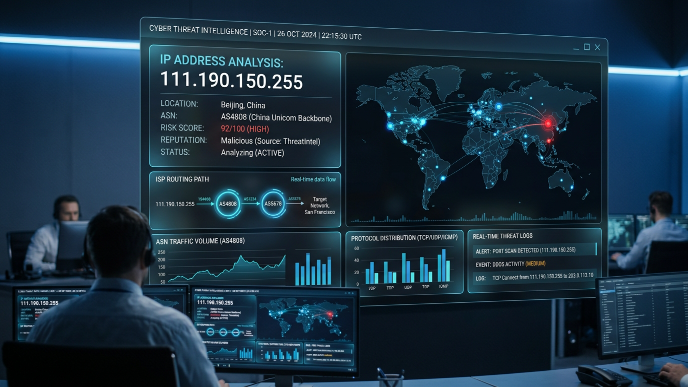
From a cybersecurity standpoint, IP addresses like 183.63.127.22 are frequently analyzed for unusual behavior, traffic anomalies, and potential threats. Security systems monitor IP activity to detect spam, bot traffic, unauthorized access attempts, or distributed attacks.
However, it is important to understand that an IP address alone does not indicate malicious intent. Many IPs are dynamically assigned and shared among thousands of users over time. A single IP may appear in logs multiple times for completely unrelated activities.
Cybersecurity professionals focus on behavioral patterns rather than isolated IP addresses. For example, repeated login failures, unusual request spikes, or abnormal traffic routes are stronger indicators of suspicious activity than a standalone IP identification.
Common Uses and Digital Activity Patterns
An IP address such as 183.63.127.22 can be involved in a wide range of internet activities. These may include browsing websites, streaming media, accessing cloud services, or communicating through applications and APIs.
In enterprise environments, IP addresses are used for routing internal traffic, balancing server loads, and maintaining system logs. In residential networks, they are assigned to routers and devices to enable internet access.
Because IP addresses are constantly reassigned, their usage history is fluid. This means the same IP could serve different users at different times, making long-term tracking unreliable without real-time network logs.
Privacy Considerations and Digital Safety
IP addresses raise important privacy considerations in the digital world. While an IP like 183.63.127.22 does not directly reveal a person’s identity, it can indicate general geographic location and ISP information.
Modern privacy tools such as VPNs and proxy servers are often used to mask real IP addresses, adding an extra layer of anonymity. These tools route traffic through alternative servers, making it harder to trace original network locations.
Despite this, responsible internet usage and data protection regulations ensure that IP data is handled carefully. ISPs and service providers are required to protect user identity while still supporting lawful security investigations when necessary.
Importance of IP Monitoring in Modern Networks
Monitoring IP addresses like 183.63.127.22 is a critical part of maintaining secure and efficient network systems. IT administrators use IP logs for troubleshooting connectivity issues, identifying performance bottlenecks, and detecting unauthorized access attempts.
In cybersecurity operations, IP monitoring helps detect potential threats early. Unusual activity patterns from an IP address may trigger alerts for further investigation, allowing organizations to respond before damage occurs.
At the same time, IP monitoring must be balanced with ethical data usage practices. Over-monitoring or misuse of IP data can lead to privacy violations, which is why global internet governance frameworks emphasize transparency and responsible handling of network information.
Conclusion
The IP address 183.63.127.22 represents an essential component of the global internet infrastructure. As part of the IPv4 system, it plays a role in routing data, enabling connectivity, and supporting digital communication across networks. While its geolocation suggests a possible Asia-based ISP origin, its exact usage can vary due to dynamic allocation and network routing practices.
Understanding this IP highlights the broader importance of internet infrastructure, cybersecurity monitoring, and digital privacy. Although it may appear as a simple numerical label, 183.63.127.22 is part of a complex global system that keeps the internet running smoothly, securely, and efficiently for billions of users worldwide.