Introduction to 111.90.150.2404
The sequence 111.90.150.2404 is often searched online because it looks like an IP address, but it does not follow valid internet formatting rules. In networking, IP addresses are used to identify devices on the internet, but they must follow strict numeric structures. When users see unusual formats like this, it creates confusion about whether it is a real server address, a tracking code, or a cybersecurity-related signal.
In reality, 111.90.150.2404 is considered an invalid or malformed IP-like string, not an active internet address. Understanding why requires a basic knowledge of how IP systems work and how digital networks validate data before it is used for communication.
Understanding How Real IP Addresses Work
A valid IP address is a numerical label assigned to devices connected to a network. In IPv4 systems, which are still widely used, an IP address consists of four numeric segments separated by dots. Each segment must fall between 0 and 255 to be valid. This structure ensures that every device on the internet can be uniquely identified and properly routed.
As defined in networking standards, IP addresses function as both an identifier and a location marker for devices on the internet.
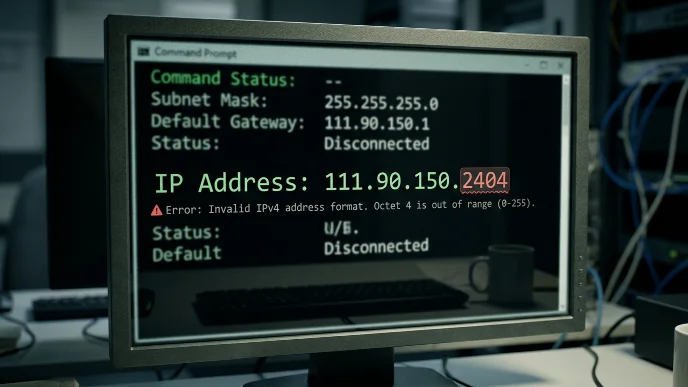
A correct example might look like 111.90.150.240, but once a value exceeds 255—as seen in 111.90.150.2404—it becomes invalid and cannot exist in real network communication systems.
Why 111.90.150.2404 Is Not a Valid IP Address
The main reason 111.90.150.2404 is invalid is because it breaks IPv4 formatting rules. The last segment, “2404,” is far above the allowed maximum value of 255. This immediately makes it unacceptable for network use.
IPv4 addresses are strictly regulated because they are 32-bit numerical identifiers used for communication between devices.
When a number exceeds these limits, systems automatically reject it. This means 111.90.150.2404 cannot be assigned to any device, server, or router, and it does not represent any real-world network location.
Possible Reasons Behind the Appearance of 111.90.150.2404
There are several reasons why a sequence like 111.90.150.2404 may appear online or in logs. One common reason is simple human error, where an extra digit is mistakenly added during data entry.
Another possibility is system-generated placeholder data used in testing environments or examples. Developers sometimes use incorrect formats intentionally to simulate errors and teach validation rules in networking systems.
In and digital discussions, such numbers are also used to attract curiosity-driven searches from users trying to understand unusual technical patterns.
Cybersecurity Perspective on Invalid IP Formats
From a cybersecurity point of view, invalid IP-like strings such as 111.90.150.2404 are not harmful on their own, but they can appear in system logs, analytics data, or error reports.
Security systems are designed to detect and filter invalid IP addresses because they help identify misconfigurations, corrupted data, or improper inputs. However, encountering such a value does not automatically indicate hacking or malicious activity.
Cybersecurity analysts focus more on patterns of valid IP behavior, traffic anomalies, and confirmed network endpoints rather than malformed sequences.
Differences Between Valid and Invalid IP Addresses
A valid IP address follows strict formatting rules and is used for real communication between devices on the internet. It allows data packets to travel correctly across networks and reach their intended destinations.
In contrast, 111.90.150.2404 is structurally incorrect and cannot be used in routing systems. Real IP addresses are governed by global standards and assigned by internet authorities to ensure uniqueness and reliability.
This distinction is important for users who come across technical-looking numbers online and mistakenly assume they represent real network activity.
Misinterpretation of IP-Like Numbers Online
Many internet users misinterpret numeric sequences like 111.90.150.2404 as hidden tracking codes or suspicious server identifiers. In most cases, this assumption is incorrect.
The internet contains billions of data entries, and not all numeric patterns have real technical meaning. Some are simply examples, placeholders, or formatting errors that appear in datasets or content creation.
Understanding this helps users avoid confusion and reduces unnecessary concerns about cybersecurity threats when encountering invalid formats.
Importance of IP Validation in Network Security
IP validation is a critical part of maintaining internet stability. Systems automatically check whether an IP address follows correct formatting rules before allowing it to be used in communication.
When a sequence like 111.90.150.2404 appears, validation systems instantly reject it because it does not meet IPv4 standards. This prevents routing errors and ensures that only legitimate addresses are processed.
According to networking principles, IP addresses are essential for identifying and locating devices within a network, making validation a key security layer in internet infrastructure.
Why Such Numbers Trend in Online Searches
Search interest in terms like 111.90.150.2404 often comes from curiosity. Users see unfamiliar numeric patterns in logs, websites, or shared content and want to understand their meaning.
Another reason is increasing awareness of cybersecurity. People are more cautious about unknown IP addresses and often search them to ensure they are not linked to malicious activity.
However, most of these searches lead to explanations showing that the numbers are either invalid, irrelevant, or simply examples used in digital contexts.
Conclusion: What 111.90.150.2404 Really Means
The sequence 111.90.150.2404 is not a real IP address and does not represent any device, server, or network location. It is an invalid format that breaks standard IPv4 rules due to an out-of-range numeric value.
Understanding this helps clarify how internet addressing systems work and why strict formatting rules are necessary for global communication. While it may look technical, it is simply a malformed or artificial number rather than a meaningful network identifier.